


What Is The Best Kicking Ball?
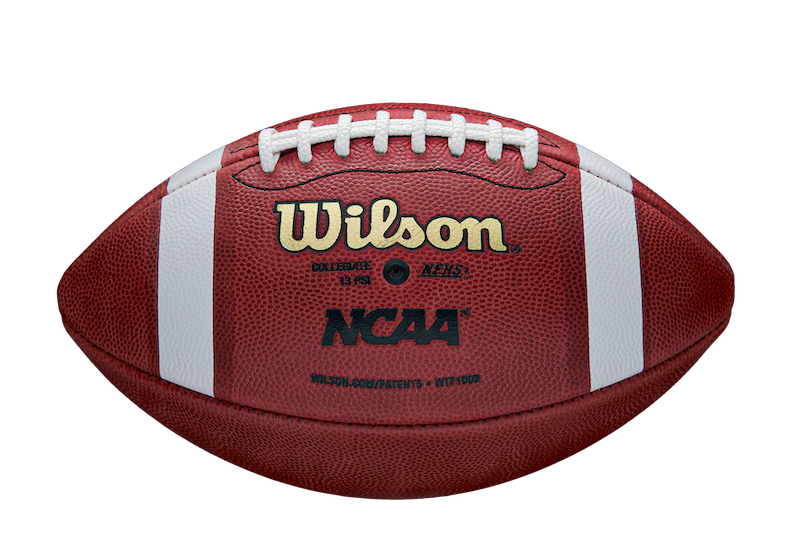
With so many choices of footballs these days, it can be mind-boggling for a new kicker, punter or parent to purchase the best kicking football. In this article you will learn everything you ever wanted to know about footballs and how to properly maintain and optimize them to help you kick the ball farther than ever! Enjoy! -Coach Brent Grablachoff, Kicking World
Sizes/Ages
One of the most important things about choosing a football for kicking is for you to get the correct size. For kickers and punters ages 13 and older, we recommend a High School sized football. Many will have the letters ‘NFHS’ (National Federation of State High School Associations) stamped on the football. This stamp means it has been certified for use by the NFHS, an organization / governing body / rule maker of HS Football. Many can also have an NCAA stamp and be used in college.
Our previous favorite HS and College (typically HS and College footballs are the same size) sized football was the Wilson 1001 football, which unfortunately is no longer in production (read on for the new best). Runner-up goes to the Spalding J5V Advance football, which we used for several years before our partnership with Under Armour (who stopped making footballs in 2020), which was before we started working directly with Wilson. While the Spalding football has very soft leather, it was not durable enough, and we would pop a few balls every camp season. We never popped one with the Under Armour 695 footballs, and we have purchased well over 1,000 balls in the last few years. At the start of 2020, Under Armour started going through changes, and they cut out the production of their footballs.
From 2021 to 2023, we used the Wilson 1005 football, which was slightly narrower than the ever-so-plump Wilson 1001, but still was a good kicking ball. Then yet again, Wilson discontinued production, and the 1005 football is no longer being made. Flipping ahead to 2023, 2024 and to current time, the best kicking ball is the Wilson GST. In years past the Wilson GST football was less supple/soft compared to the footballs mentioned above, but they improved the formula the last few years and it’s a pretty solid and durable football. We prefer the traditional red/pink colored balls and they also make them in a more orange color.
For kickers and punters ages 10-12 we recommend a ‘Youth’ sized football such as the Wilson youth composite football. All of ther above mentioned football kicking footballs can be purchased from our kicking equipment parter Wizard Kicking’ directly on their website at WizardSports.com
Composition
For kickers and punters ages 12 or younger we recommend a composite (rubber football). For kickers and punters 13 and older, it is critical that you practice and play with an authentic leather football. In HS and College if you are practicing with a composite football you won’t get the true ‘feel’ of a game ball and will set yourself up for failure. A composite football is overly forgiving with foot to ball contact. A composite football travels a solid 3-5 yards further than an identical kick would with a genuine leather football. While composite footballs are substantially cheaper (typically half or more the cost) than a leather football, you will be hindering your performance and growth as a kicker/punter in HS and beyond. It is ok to keep a couple of composite / rubber footballs on hand in inclement weather to kick when conditions are less than stellar. Kicking with expensive leather footballs in the rain might not be the most prudent decision as the footballs can become heavy, and that extra weight can put extra stress on your leg, not to mention wear out faster. for our youth specialists (ages 9-12) using a composite aka rubber football is fine for all of your training and in games, but if you’re nearing middle school and high school what some students have done is use 3 of the youth footballs and sub in 2 high school football for every set of 5 kicks and punts to get acclimated to the larger, more heavy ball you’ll soon use.
Shape
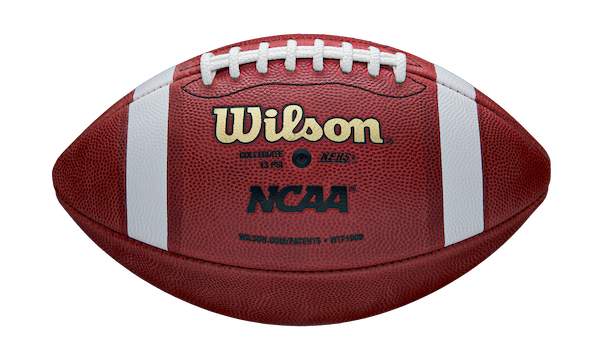
Most KICKERS will prefer a fatter football and most PUNTERS will prefer a narrow football. This statement is based on logic and experience at the over 50 camps a year we do where we see thousands of specialists of all ages and skill levels. The reasoning behind this is because with kicking, the most important aspect to achieve fundamentally to ensure a successful kick is Proper Foot to Ball Contact. And with a Punt, the Drop is paramount. Because of this, a fatter (think more stubby/wider) football will allow more surface area for your foot to strike and it not only increases the sweet spot and minimizes the negative effect of an imperfect hit, but the fatter football also creates more ‘bounce’ or compression when the ball is struck by your foot. Because of this, I truly believe the best football for a kicker in a game is the fattest, most worked-in football you can find.
For punters, I feel that because most youth and HS students’ hands aren’t fully grown yet, a narrower football allows the punter to ensure a better grip and more consistent drop. In college football there are various collegiate partnerships such as Wilson, Nike, Adidas, and Big Game, so the school’s choice of football is generally dictated by their sponsor. A big issue many rookie college kickers face is switching to one of the Nike footballs (Vapor Elite) and a narrow pointy ball (Vapor One). The narrow pointy ball (Nike One) is excellent for hitting spirals on punts but is terrible when kicking because the foot more easily wraps around the ball, especially with a bigger foot, creating a wobbly end-over-end kick. The Nike Elite is slightly closer to a traditional shape but still not nearly as good as our preferred footballs. It is a long adjustment period for many high school kickers when entering college if they switch to this narrow style football. Many colleges, however, will allow their kicker to sub in their preferred ball as long as it is the same brand (although it’s hard to substitute on any play except the kickoff).
Feel/Pop/Distance
Some footballs feel like they boom off your foot (we call this pop). Other footballs don’t seem to go as far and sometimes even hurt your foot at impact (especially on a cold day). My favorite ball for kicking is the Wilson GST football. It has a lot of ‘pop’ and is the best kicking ball because it’s more forgiving with foot to ball contact and it bounces off the foot nicely. I think some of the leather balls out there are too tough of leather and don’t have a nice feel. I’d equate it to a Titleist Pro V1 golf ball vs a Top Flite ball. One is like a rock (Top Flite – cheaper ball), and the other feels amazing off the face of the club (soft feel – nice touch). Always try to find the softest leather football you can find!
Quarterback
Many times, the fate of your football is unfortunately left to the quarterback. This could foul you up. If you’ve played the last 2 years on a team with one quarterback with small hands (most likely he liked a less full football), and now in your Senior year, you have a new quarterback with larger hands (most likely likes a more pumped up / fuller football), this could cause a severe issue. I would do everything in my power to have some control over the inflation of the footballs you kick in the game. If possible, ask to swap out the kicking football from the quarterback ball on all extra points at a minimum. Even better, try to do this for field goals too (most of the time, they won’t, though – because there is less time to set up the play). At worst, be sure to have your optimal football for your kickoffs. If you notice the Quarterback is inflating the football extremely low or highly pumped up (think 13+ PSI or 9 PSI), you should say something to the coach and try to compromise.
Inflation
Using a pump with a pressure gauge to inflate your footballs is the surest way to prepare your kicking football. If you don’t have a pressure gauge, how hard should a leather football feel by squeezing it? Great question! I would say you should be able to press your thumb into the ball with about 1/4″ of depression. If you’re able to sink your thumb in there 3/4 of an inch or a full inch, the ball is way under-inflated! If you can’t press the ball inward at all, then it’s most likely over-inflated.
The optimal inflation of a high school sized football, in my opinion, is 11.0 PSI (pounds per square inch). This is what we use at all Kicking World camps and lessons with our Wilson 1001 footballs. Most footballs have it written on the outside to ‘Inflate between 11 – 13 PSI’ or ‘Inflate to 13 PSI.’ For kicking and punting, a leather football inflated between 10.5-11.5 PSI is great. Note – if you have a composite (rubber) or youth (smaller) football, the 10.5-11.5 ideal range is not applicable and those footballs will fill up with much less air.
Watch this very useful @KickingWorld Youtube video where I show you How to inflate your kicking footballs
The best kind of cheap/portable pump is a dual-inflation ball pump, and the Tachikara manual pump is my favorite. And if you have the money, or want the very best, the newer style portable electric pumps like the AirSilo will automatically get the ball to the exact PSI you want, so there is no guessing. It is awesome because you don’t have to tire out your triceps and forearms pumping away; simply insert the needle and press the button.
Optimizing your Football
We’ve all heard about the ‘Deflategate’ scandal with the New England Patriots and Tom Brady doctoring up the footballs by taking air out of them before the games. Well, as you’ve probably figured out by reading this article, there is certainly a major advantage or disadvantage for kickers and punters based on the proper or improper inflation of a football. In addition to inflation and getting the correct PSI in your footballs, here are some other things you can do to maximize the effectiveness and carry/distance of your football for kicking and punting.
- Kick and Punt the football as much as you can to ‘break in’ the leather. Even the softest natural leather footballs are still fairly rough/firm at first. It requires sometimes kicking a football 1,000+ times before it can truly be broken in!
- This is rather extreme, but you could slightly dampen the football with a quick/light rub of a damp cloth. Then put the football in a dryer with a damp towel for 10-15 minutes on a medium heat cycle. This will help expand the leather and ‘fatten it up’ more quickly than waiting 1-2 years of kicking to have the break in period naturally occur. Be careful not to over-wet the football as it will add weight and possibly even waterlog the football, thus negating any positives you accomplished in breaking in your football.
- Do not leave your football kicking bag in the rain outside (or in the bed of your truck)! One of my students in Central Texas left 6 brand new footballs in his kicking bag overnight in his truck bed. The next morning at our lesson he had a bag full of waterlogged balls. They never quite recovered and he had to end up purchasing new footballs again. Always keep your kicking bag in your locker room or safely with the coaching staff. A safety side note – if your footballs are noticeably heavier after a rainy game or practice, give them a day or two to dry off completely in the sun. Sometimes they recover just fine, but in heavy rains or if they were sitting in water, they are never the same and you might as well throw them out. You can really hurt your leg both with kicking and punting if your ball is waterlogged. Your leg is not used to that extra weight and it can definitely contribute to a hip/quad/etc injury.
- If you’ve ever kicked one of those footballs that is so dark in color with little to no grip left on it and the leather is super soft, you will know what we call a bomber ball. There is no greater feeling as a kicker than blasting a 50 yarder with a bomber ball that seemingly carries forever past the uprights. It’s like a golfer ‘puring’ a 7 iron shot that comes off the clubface perfectly and you barely hear/feel the ball, it’s like swinging into a stick of butter – so smooth! Everything just feels right and it comes off your foot with authority and minimal effort.
- If you can turn your footballs into a bomber ball, or be fortunate enough to inherit a bomber ball from the old ‘kicking balls’ stash at your school, you need to hold onto it and use it for all your kickoffs in game! You will instantly add 3-5 yards (for a typical HS or College level kicker) to the distance of your kickoffs and field goals! Most refs are judicious about not letting obviously ‘over-worked’ balls into play, but many times they are more lax with the rules on the football you use for the kickoff. So keep this in mind and try to maximize your distance in any way you can while staying within the rules.
How to Kick the Ball Further
I discuss this in detail at our camps, private lessons and in my DVD and Book but a simple, short answer is actually a scientific equation.
Newton’s Second Law of Motion: F = m x a
Force = mass x acceleration
For kicking, I believe that precise foot to ball contact is THE most critical fundamental aspect you must consistently achieve to ensure further and straighter kickers. Improving your leg speed will also help you to start adding distance to your kicks, immediately (as long as you stay consistent with foot to ball contact and don’t swing so fast that you become inaccurate with your foot to ball contact).
Watch this very useful @KickingWorld Youtube video where I show you What is the best Ball Holder (Kicking Sticks) to Purchase
Alternative Footballs
The Spalding J5V Advance (not silver or gold) is what we used a long time ago when we first started our camps. They are very good for kicking, but we found them not durable enough for camp use as we would lose a few a year due to them popping after hitting the track surface. From 2016 until 2019 we used the Under Armour 695XT football, however Under Armour stopped production of their inflatables. Previously we wrote the Wilson 1001 as one of the top 3 kicking footballs available, but as mentioned earlier it’s no longer in production, so the replacement is the Wilson GST.
Many Texas HS football schools use the Wilson GST leather football so if that’s the one your team uses, buy a few and try to break them in so they aren’t so hard. For high school-sized rubber footballs, the Wilson GST Composite football is great for rainy/wet HS or College practices as it is more water-resistant, and you won’t ruin your kicking footballs. They are very affordable at Academy Sports & Outdoors and Dick’s Sporting Goods. We use the Wilson GST rubber football for rainy lessons and camps. And of course, if you are working toward playing professionally, the gold standard is the Wilson ‘Duke’ NFL Football. Again, all of these footballs can be purchased from WizardSports.com and be sure to use our coupon code mentioned at the bottom of every Kicking World monthly email newsletter and kicking camp details email we send out!
Cost
High-Quality kicking footballs are not cheap. Typically you can expect to pay between $80-$100 for a genuine leather football. Tip: Mike at Wizard Sports sometimes gets overstock orders of ‘blem balls,’ which means they have a slight cosmetic defect (just like getting a purse at an outlet store) that might have a tiny visual nick, scratch, or imprint misalignment, but it does not negatively impact the performance of the football. You will be kicking them anyway, so this is a great way to save perhaps 15-30% off the price of new ones. Be sure to look on their website for deals like that, and don’t forget to mention Kicking World when you checkout.
Where to Buy
Purchase kicking balls from Mike at WizardSports.com and check out my Amazon Seller Page for miscellaneous kicking equipment and training products that I recommend for our students (most of them we use for our camps and lessons).
Next Steps
Signup for Camps, Private Lessons, and Purchase my Instructional DVD & Book at KickingWorld.com
Check out a similar article on our kicking blog titled ‘What Should I Bring to a Kicking Camp?‘ so you know exactly what you’re expected to bring with you the day of camp!